UXY · Learning Programs · 2024 – 2026
Keep the speakers, and the learners follow
UXY is an online career accelerator for designers. As course operations assistant I run its workshop programme end to end. I treated it as a two-sided product and decided to design for the supply side first.
ROLE
Course Operations Assistant: programme, speakers, enrolment, hosting, settlement
TEAM
Founder, community lead, TAs, guest speakers
DURATION
Jul 2024 – Jul 2026 · part-time, remote
19
WORKSHOPS (2025 – 26)
17
GUEST SPEAKERS
4.7/5
LEARNER RATING
98%
SPEAKERS RETURN
“A workshop has two kinds of users. Lose the learners and one session is empty. Lose the speakers and the whole next quarter is.”
Challenge
Two series a month, on a part-time budget
A design-skills workshop every month and a cross-functional one every other month, with a cap of 80 hours a month for everything.
Most speakers start as a cold message. A design-skills session that doesn't reach 10 sign-ups is cancelled. And every session repeats the same pile of work: the pitch, the outline, the listing, posts on five platforms, the rehearsal, the survey, the settlement. If one speaker has a bad experience, word travels in a small industry, and the next pitch gets harder.
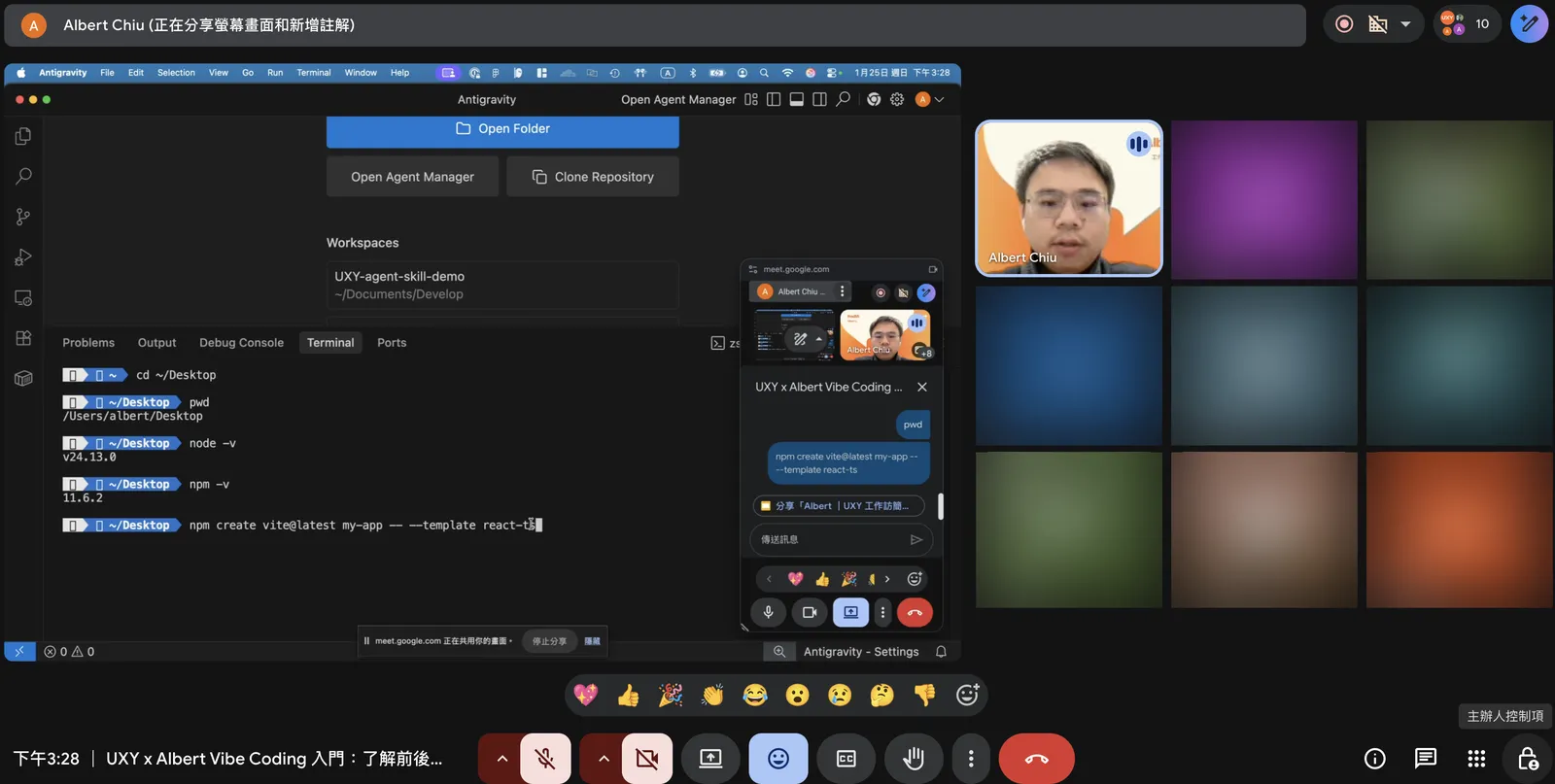
Decision 01
Design the speaker journey before chasing sign-ups
Judgment: supply runs out before demand does.
Learners can be reached through members and community channels. A good speaker can't be replaced in a week. So I turned the speaker side into one fixed journey, the same for every session, that a new speaker can join after a single 30-minute call.
- 01
Pitch
30-min call, calendar hold, agreement back within a week
- 02
Shape
Outline co-written in Notion, listed with early-bird pricing
- 03
Fill
5 channels within 48 hours, sign-up updates to the speaker
- 04
Rehearse
Tech check and run-of-show one week before
- 05
Close
Recording, survey results and revenue share sent back
98% of speakers say they would work with UXY again. Harry and Jack both came back for a second session.
Speakers remember the rehearsal and the payment date, not the stage.
Decision 02
Use the rules as the interface
Judgment: two series, two different incentives.
The two series solve different problems, so they run on different rules. I used those rules as the pitch itself, so every speaker knew from the first call what a good session meant for them.
Design-skills series
Goal: grow paid membership
Fixed speaker fee. Opens at 10, caps at 30. Half the seats are free for members, top tier first. The free seat is the reason to upgrade.
Cross-functional series
Goal: bring speakers' own audience
Revenue share instead of a fee. 55% after the minimum, rising to 60% for every extra learner, so speakers promote their own session.
Design-skills sessions average 24 learners, cross-functional ones 20, both well above the threshold.
An opening threshold changes behaviour as much as a button does.
Decision 03
Follow where learners are trying to go
Judgment: the career question changed.
In 2025 topics were planned quarter by quarter. Every survey ends with 'what should UXY run next?', and those answers drifted from entry-level skills towards AI tools, remote work and job hunting abroad. For 2026 I grouped the line-up into five tracks: product practice, AI integration, remote collaboration, international markets, and data for business.







21 topics planned for 2026. Learners rate the workshops 4.7 / 5 on average.
The last question of the survey is the roadmap for next year.
Decision 04
Give the repetitive writing to AI
Judgment: my hours belong to people, not copy.
Three writing jobs came back with every workshop. I turned each into a Claude skill with a fixed structure, so the output is consistent and I only edit.
Speaker invitation
Reads a speaker's public profile, drafts a five-part pitch.
Workshop launch
Turns the Notion outline into the event listing and posts for 5 platforms.
Post-session recap
Reads the slides and learner quotes, drafts the LinkedIn thank-you post.
Three documents per workshop went from written from scratch to reviewed and edited.
Automation was worth it only after the process was fixed. Automating a moving process just moves faster in circles.
Results
A programme that runs on a playbook
10
Bootcamp graduates certified (Fall '24)
6
Mentor recommendation letters
4.5/5
Host score from learners

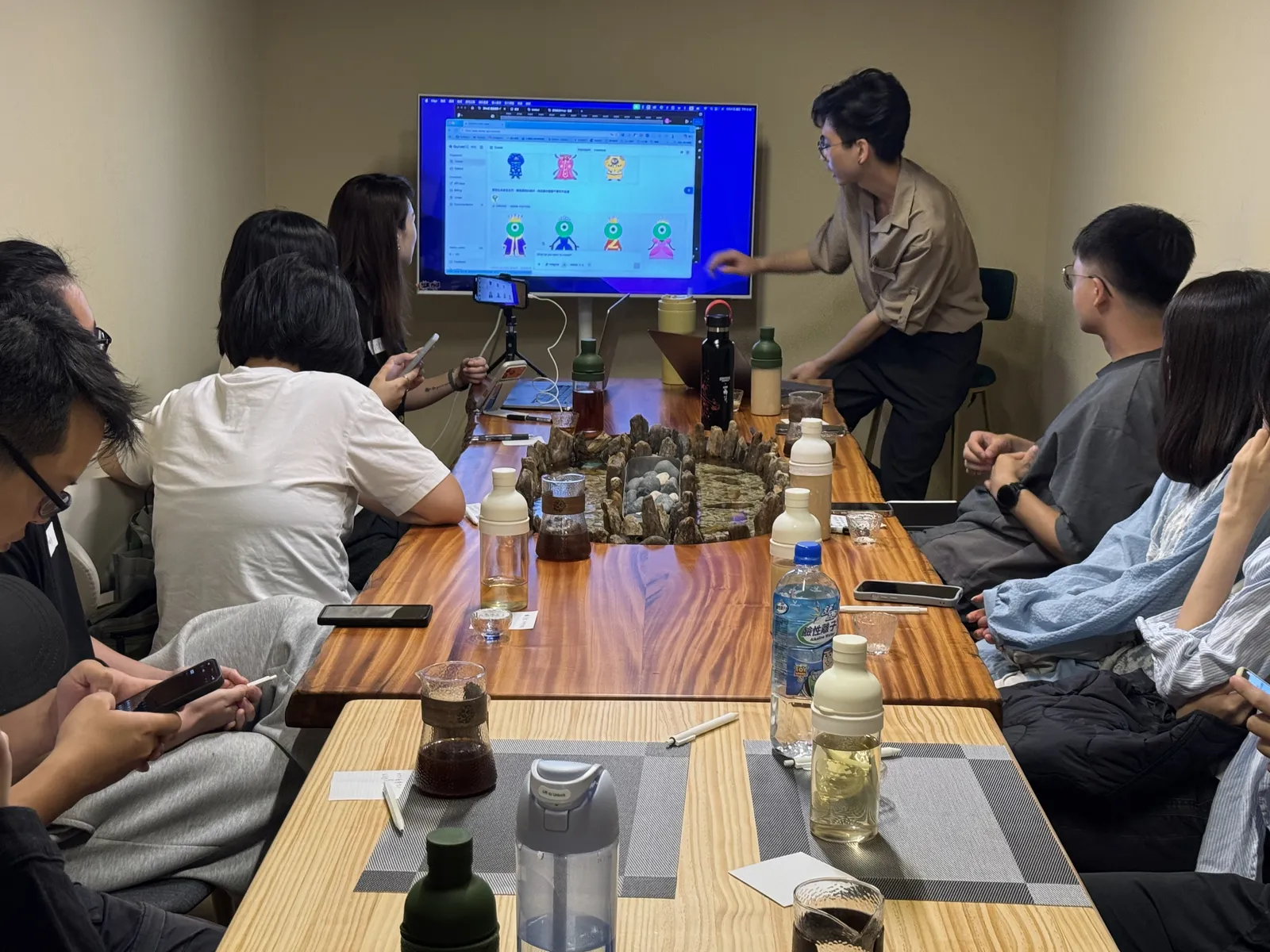
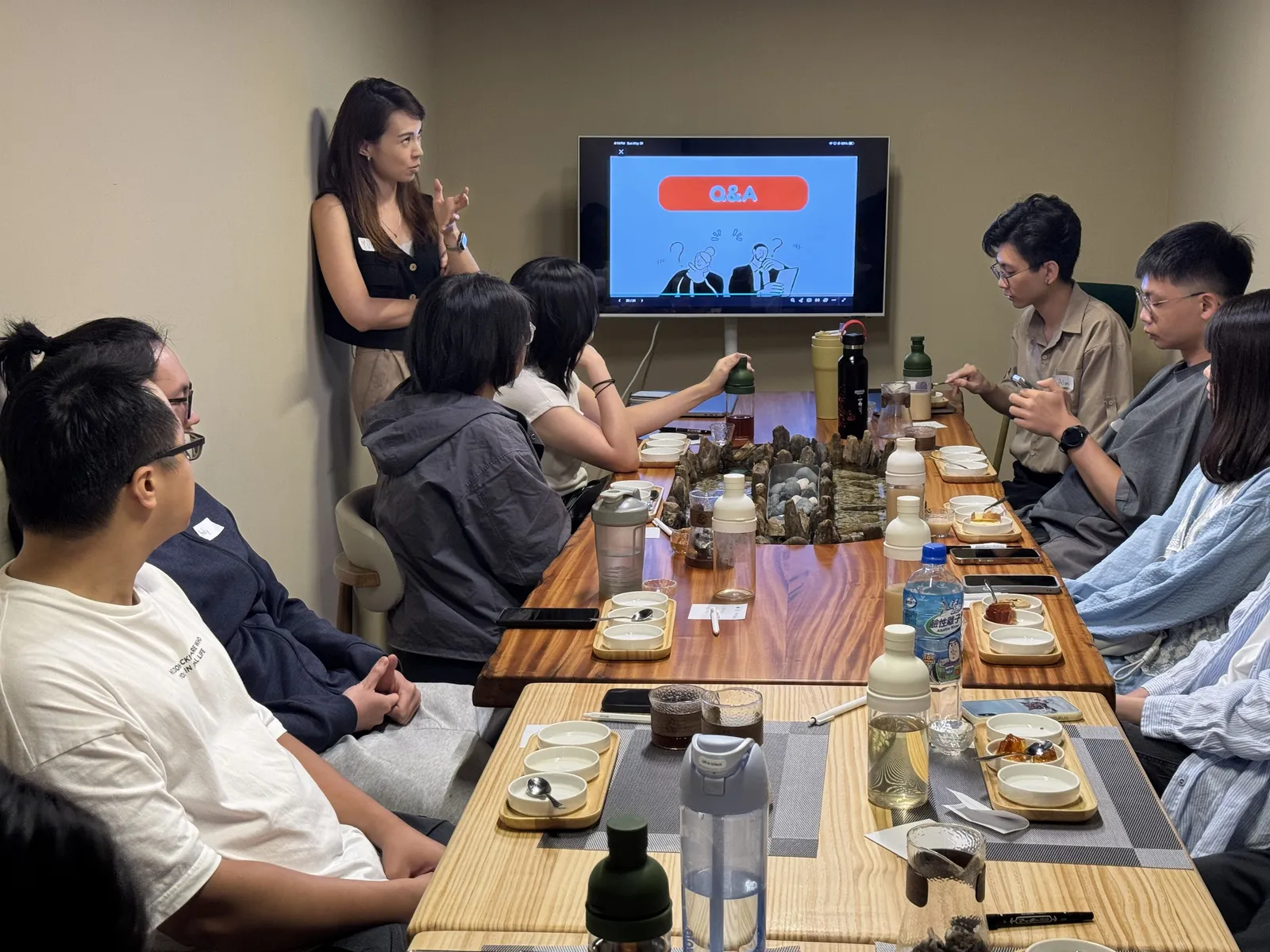
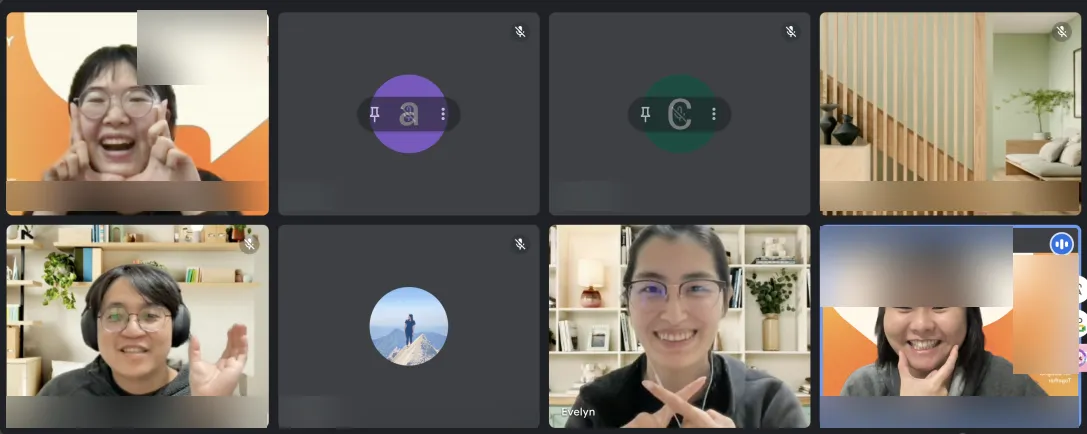
“Thank you, Evelyn. Your support on operations meant I had nothing to worry about and could focus entirely on teaching.”
Reflection
What this changed in how I design
Find the side that runs out first
In any two-sided product I now ask which side is harder to replace, and design for it first.
Policy is part of the UX
Pricing, thresholds and revenue splits shape behaviour. I review them with the same eye I use for flows.
Fix the process, then automate
AI saved me hours only because the five stages were already stable.
Participant names in screenshots are blurred for privacy. Numbers from UXY's speaker deck, post-session surveys and event records.